
For wedding and event venues
How to run an event without the scramble
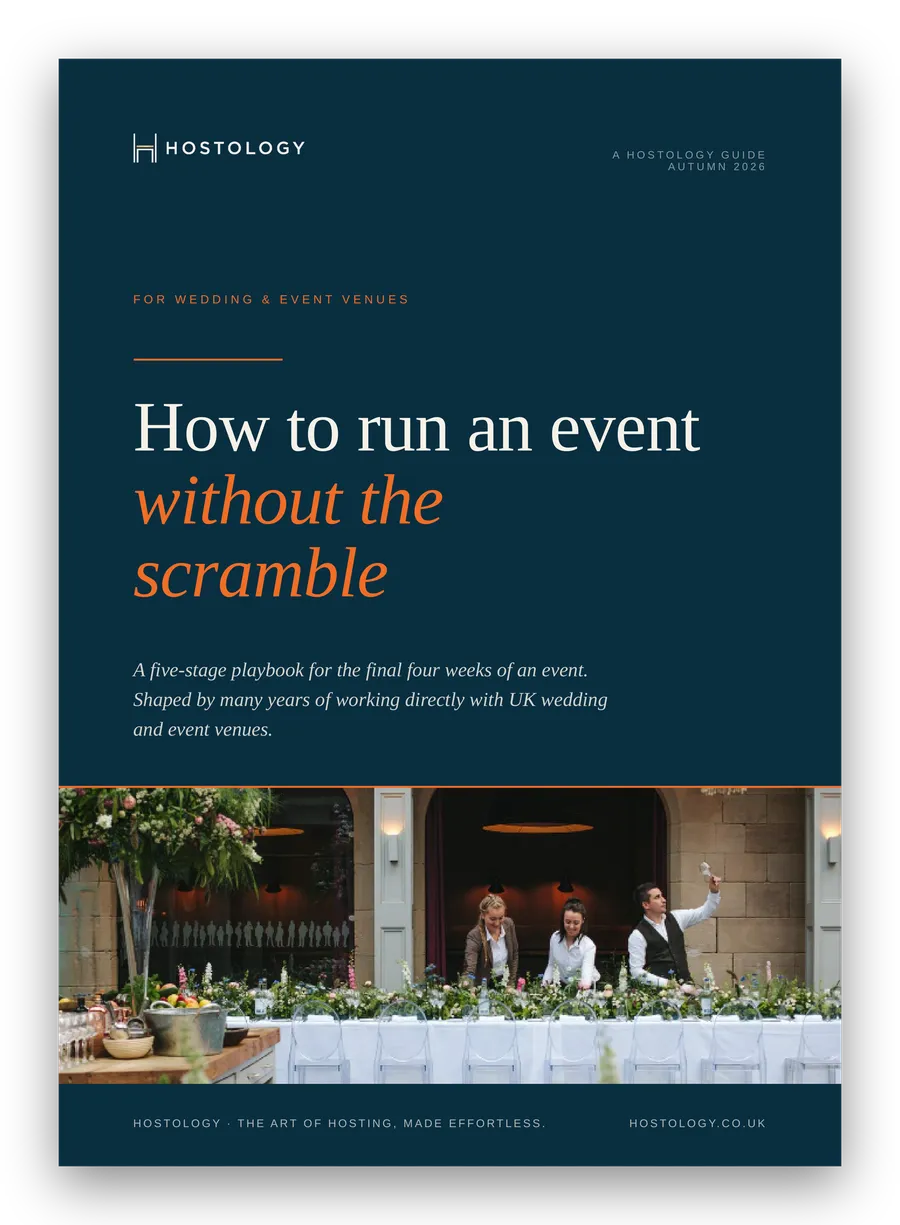
A five-stage playbook for the final four weeks of an event, with a companion checklist for every stage.
- 14
- pages, free to download
- 5
- stages, four weeks out to closeout
- 5
- checklists your team can work from
Send it to me
Add your details and the guide is yours straight away.
We will not pass your details on to anyone else.
Why it happens
The scramble on the day rarely starts on the day.
There is a point in almost every event when the plan meets real life. A host changes something. A supplier cannot get what they promised. The weather has its own ideas. Add peak season pressure, and the wheels come off.
The venues that feel calm on the day do not have fewer last-minute changes. They have fewer unknowns. They know what needs to be fixed early, what can wait, who owns each part of the event, and where the latest information lives.
This guide sets out how they do it, week by week.
What is inside
The last four weeks of events, across five stages.
Each stage covers what should be locked, what should still be moving, and what can wait. Each one comes with a companion checklist your team can work from.
-
Four weeks out
Lock down catering, rooms, suppliers, payments, and the on-the-day team.
-
Two weeks out
Hand the event from planning to operations without losing the decisions that matter.
-
The week of
Keep the team ahead of changes without rebuilding the plan every morning.
-
On the day
Give experienced people the information they need to make decisions, not search for answers.
-
After the event
Close the money, capture the lessons, and make the next event easier.
Does it actually work?
Llantilio House went from seven events a year to around 58.
The core full-time team has stayed at three. Enquiries, event plans, accommodation, payments, and repeatable processes sit in one place, rather than more manual work every time the diary gets busier.
The guide covers the habits behind that, stage by stage.
Six signs
Is it the event, or the system behind it?
Before you add another spreadsheet, meeting, or WhatsApp thread, look at the pattern.
-
Your morning stand-up starts with somebody reading numbers from yesterday's printed sheet.
-
Two people are chasing the same host for the same guest count.
-
You cannot tell at a glance which rooms are paid for and which are not.
-
Your chef receives the final dietary list through WhatsApp.
-
Supplier insurance lives across a spreadsheet and a stack of emails.
-
The useful post-event learning stays in one person's head.
None of these means your team is doing a bad job. Usually the opposite is true. Good people are spending too much time carrying information by hand, checking versions, and keeping the whole event in their heads.

Ready to say goodbye to the scramble?
Get the guide, and five checklists to work from.
Free to download. It takes about twenty minutes to read, and rather less to work out which stage is costing your team the most time.
Send me the guide